
 咨询电话:
+8613822112459
咨询电话:
+8613822112459

|
|
Steel-Clad Composite Material Bridge Anti-Collision Facility
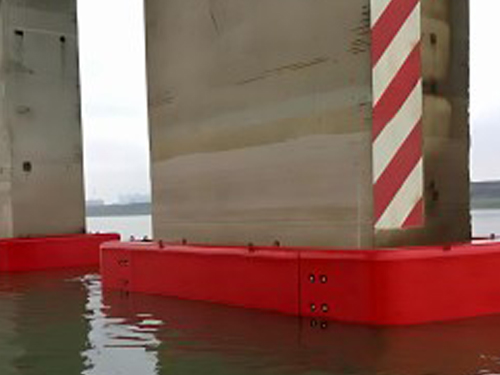
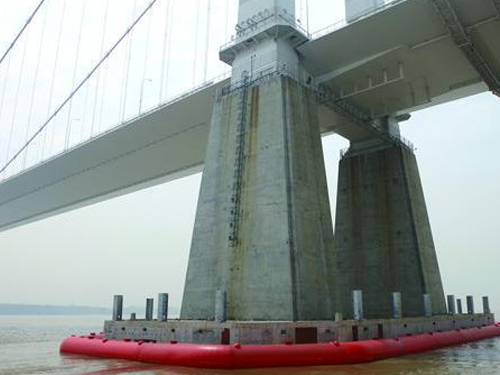
Floating Steel-Clad Composite Material Bridge Anti-Collision Facility Floating steel-clad composite flexible energy-absorbing fenders are installed around the piers of a bridge. With the rise and fall of the river (or waterway) level, these floating steel-clad composite flexible energy-absorbing fenders move up and down along the axis of the bridge piers, relying on the buoyancy of the water, ensuring that the steel-clad composite flexible energy-absorbing fenders are always positioned at the height of potential ship impacts. The cross-sectional shapes of the composite flexible energy-absorbing fenders can be rectangular, semicircular, circular, irregular, polygonal, and so on.
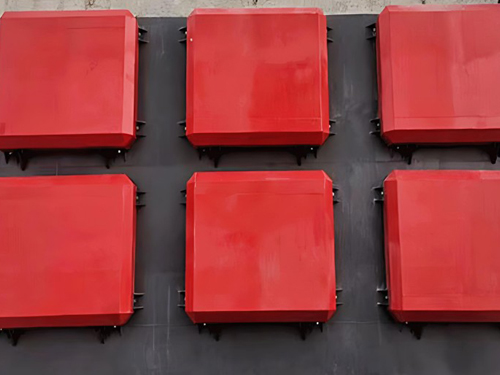
Fixed Steel-Clad Composite Material Bridge Anti-Collision Facility Fixed composite material bridge anti-collision facilities are bridge collision protection devices fixed at the collision-prone areas of bridge piers or bearing platforms. The composite material bridge anti-collision facilities are secured around the bridge piers or bearing platforms with bolts. Fixed composite material bridge anti-collision facilities can closely fit the surfaces of bridge piers and bearing platforms, absorbing kinetic energy through a combination of flexibility and rigidity, thereby protecting the safety of bridges, vessels, and personnel. Applicable areas:inland rivers and coastal waterways. Design Basis:"Inland Waterway Navigation Standards" (GB 50139-2014), "Waterway Law of the People's Republic of China", "Technical Guidelines for Highway Bridge Ship Collision Prevention Devices" (T/CHTS 20005-2018), and "Inland Traffic Safety Signs" (GB 13851-2019). Product materials:steel-clad composite materials, anti-corrosion materials, flexible cushioning materials. |

|
地址:Room 3005, No.26 Kaitai Avenue, Huangpu District, Guangzhou, China
电话:+8613822112459 Copyright © Guangzhou Suningsea Technology Co., Ltd. All Rights Reserved. 网站备案号:
粤ICP备09127193号

扫码添加微信 |